


I’m not a great poker player, but I’ve gotten pretty good at reading the tells of fellow competitors and teammates. A subtle shift in cadence that suggests someone is about to attack. A shoulder shrug that says they’re tired.
The first time I thought about borrowing the poker term was when I met a rider nicknamed “Mr. Bobblehead.” He earned it because, whenever he was on the limit, his head would tilt to one side and start bobbling.
My friend Michael Allison starts to stiffen his arms and drop his head when he’s going full gas. When he’s truly at the end of the rope, you can look back and see him bearing his fangs, mouth wide open, trying to bite the air for every last bit of oxygen. My friend Scott Williamson shakes his head “no” and throws up a hand like an Italian chef watching his pasta get overcooked.
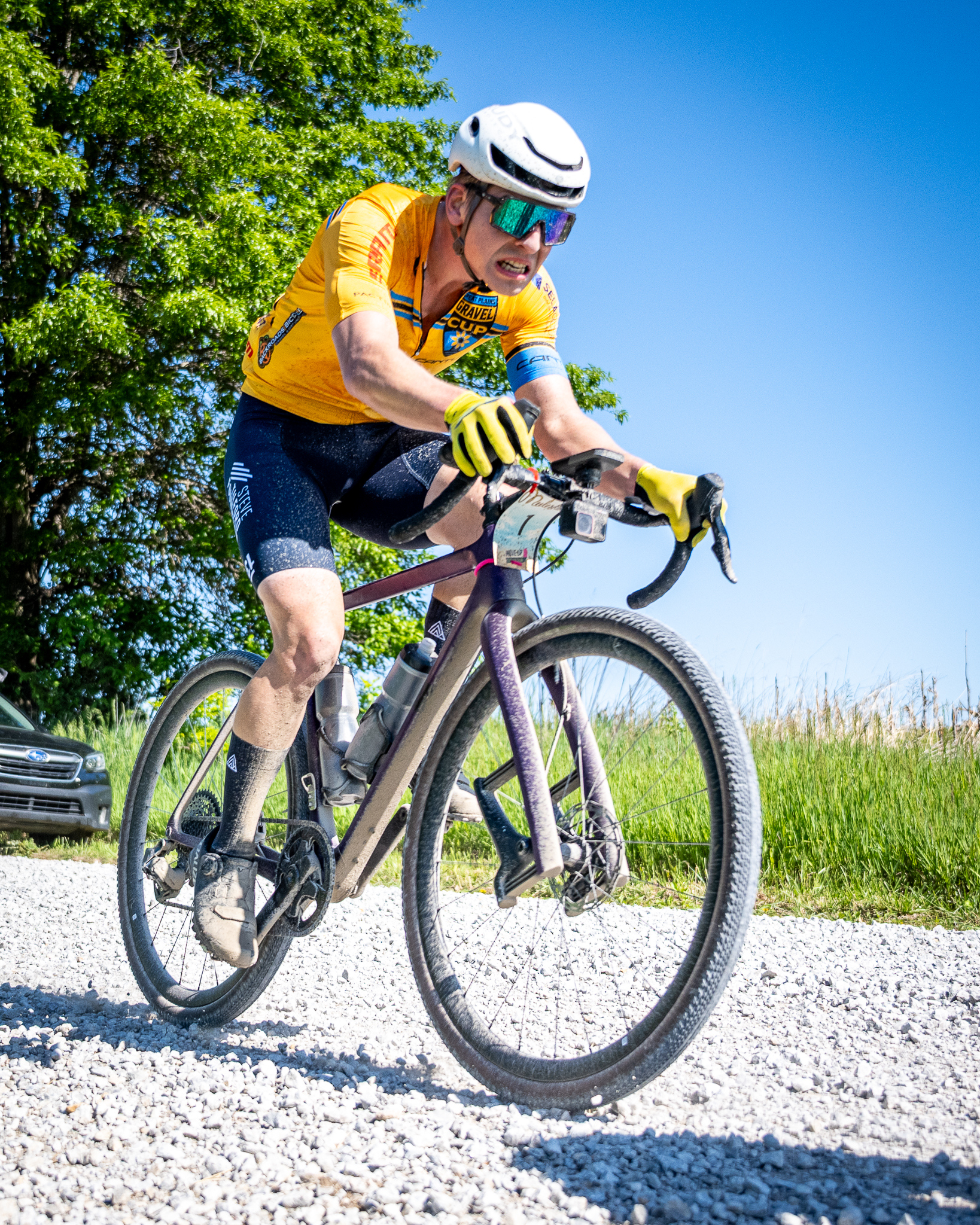
Sometimes these tells are obvious. Other times, they’re a subtle shift in body language. Watch for them in your next race and you’ll start to see them everywhere.
The point isn’t just noticing a tell. It’s deciding what to do with the information.
Read the complete picture, not one signal
Combine subjective inputs, like a rider shaking their head in defeat, a choppy pedal stroke, or shrugged shoulders, with objective inputs: you’re getting dropped, the speed falls dramatically when they pull through in a breakaway, or they stop taking pulls because they’re fatigued rather than tactical.
Together, those clues give you something you can act on. Do you continue driving a break with a rider who is gassed and can’t contribute? Do you keep sitting on the wheel of a rider at the back of the pack who’s clearly done when the course is about to turn into a difficult crosswind section?
Ignoring the signs can get you into trouble in road and gravel racing. You assume a rider will do what you’d expect if they weren’t about to explode. Then, when they do, you have to correct the mistake afterward, usually by burning a match.
It’s just as useful to learn your own tells. Ask your riding buddies if you’re not sure. Once you know them, you can begin recognizing them yourself and maybe even disguising them a little when it’s time to convince the competition that you’re tired or perfectly fine.
Your recovery tells matter, too
There are in-the-moment tells like the ones above, but there are also bigger-picture tells that signal it’s time to rest. Your body and mind are always sending signals. We’re just not always very good at noticing them.
Mid-season rest periods are often the hardest to take, despite there usually being plenty of signs that recovery is needed. The weather is consistently good for riding outside, there are group rides every week, and there’s always another race that “needs” racing. In other words, there are plenty of reasons to keep pushing and very little that naturally forces a break. Winter tends to take care of that with structured training, bad weather, or simply fewer rides and races to miss.
So how do you know when it’s time to rest?
Knowing your tells helps. Since many of us are skilled at ignoring them, though, it’s useful to pair those tells with a few objective measures.
Subjective recovery tells
None of these automatically mean you need rest. Treat each one as a clue to consider alongside the others.
Lack of motivation
If riding starts to feel like a chore, and you normally love riding, that dip in motivation is worth noticing.
Fatigue can certainly kill motivation, but maybe you’re just bored with the same routes. Maybe you’ve done the same interval workout one too many times and need something different. Low motivation does not always mean you’re overtrained. It means there’s a signal worth investigating.
Your mood goes south
This is a big one for me.
I can usually convince myself to get out the door and train. But if I’m showing up to the group ride already grumpy, or coming home after a perfectly good ride and being short with loved ones over piddly things, it’s usually time to eat a snack and take a nap.
It feels obvious when we’re dealing with kids. As adults, we tend to chalk it up to: “I’m just having a bad day. I’ll power through it.”
Persistent soreness
Waking up sore or struggling to get moving can simply be normal short-term soreness from training. But if you’re waking up feeling sore or tight more often than not, start paying attention.
Hard-training athletes have a rotating collection of aches and pains. You’ll have some whether you sit on the couch every day or ride, lift, run, or spend the afternoon in the yard. The useful skill is learning the difference between normal, acceptable soreness (also known as getting old, sorry) and the feeling that you’ve absorbed all the training you can and need extra rest.
Ignoring the second kind is how tendinitis and other overuse injuries slowly build until they force you to stop training, whether you want to or not.
Longer warm-ups
Our bodies are remarkably good at adapting and compensating. If you consistently start rides stiff and need an extra 10, 20, or even 30 minutes before you feel good, that’s a strong signal that your body is tired.
It’s similar to lifting with tendinitis. Your knee may hurt at the beginning, then feel fine after you warm up and blood flow increases. That doesn’t mean the tendon magically healed during the warm-up. More often than not, you’ll feel worse once the session is over. The same thing can happen on the bike.
Use training data to confirm the trend
This is where a training diary and good data become useful. Heart rate, power, HRV, resting heart rate, and similar metrics can help you understand what is happening beneath the surface.
They aren’t meant to be followed blindly. A negative TSB or a low HRV score does not automatically mean you need rest, especially if you wake up excited to train and genuinely fresh. Use the numbers to help confirm what your body is already telling you.
Performance Management Chart: follow the trend
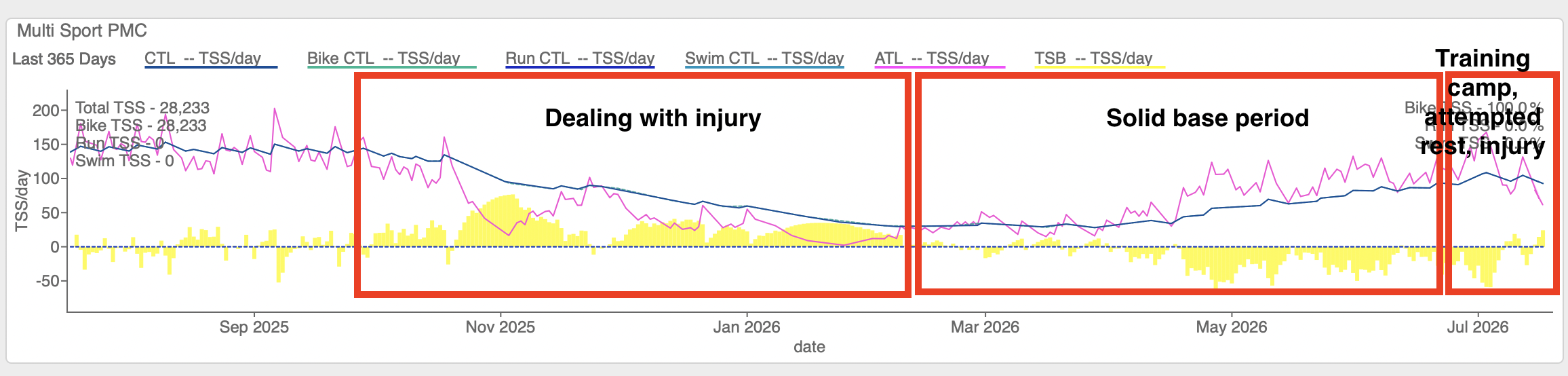
The Performance Management Chart (PMC) is incredibly useful, but it can also lead athletes astray when they rely on it too heavily.
For example, a coach might determine that an athlete performs best around a CTL of 80 with a TSB between 0 and +10. That can be a reasonable target. But what should the coach or athlete assume if CTL is 75 and TSB is -5?
Probably nothing.
I spent years trying to be overly precise with these numbers. That’s a mistake I encourage athletes to avoid. The PMC is exceptional at revealing trends, and the trend I care about most here is fatigue balance, or TSB.
An athlete can recover from an early-season injury, build productively for months, take a few short recovery periods, and still never truly come up for air. If TSB stays negative from early April into mid-July, four days off after a demanding camp might look sufficient on paper. It may not be.
Motivation can remain high while the body sends increasingly obvious signals that more recovery is needed. I’d usually defer to what the athlete is telling me and how they are responding to training week after week. If progress is steady and stoke is high, we’ll usually keep pushing. But when the subjective and objective tells point in the same direction, listen.
Recovery is open-ended. If four days does it, great, though I’d consider that short. Seven to ten days is more typical. If it takes two weeks before you feel like yourself again, start asking questions about sleep, nutrition, life stress, illness, or other factors that might be slowing recovery.
HRV: another clue, not a command
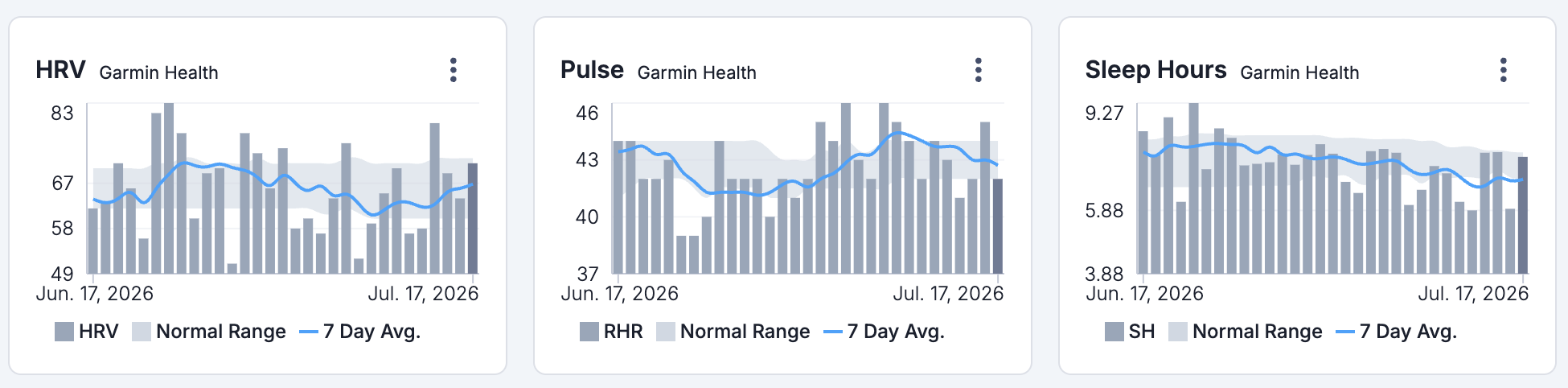
I view HRV much the same way I view the PMC. It’s valuable for identifying trends, but it should not dictate every day-to-day decision.
If you wake up feeling fantastic, have intervals scheduled, and HRV reports only “fair” recovery, I’d still ride the intervals. If you tend to be heavily influenced by numbers, wait until after the workout to review HRV. Start the day with a clear mind instead of looking for reasons the workout might go poorly.
HRV becomes valuable when you connect it with everything else. Maybe motivation has slipped, you’re waking up sore, TSB has been negative for several weeks, and yesterday’s endurance ride felt much harder than it should have. Then you notice your HRV has trended lower for several days.
That’s another clue, not proof, just another part of the picture. You may only need a few easy days. But if it’s the middle of July and you’ve trained consistently since winter, it may be time for a true transition week.
Take a true transition week
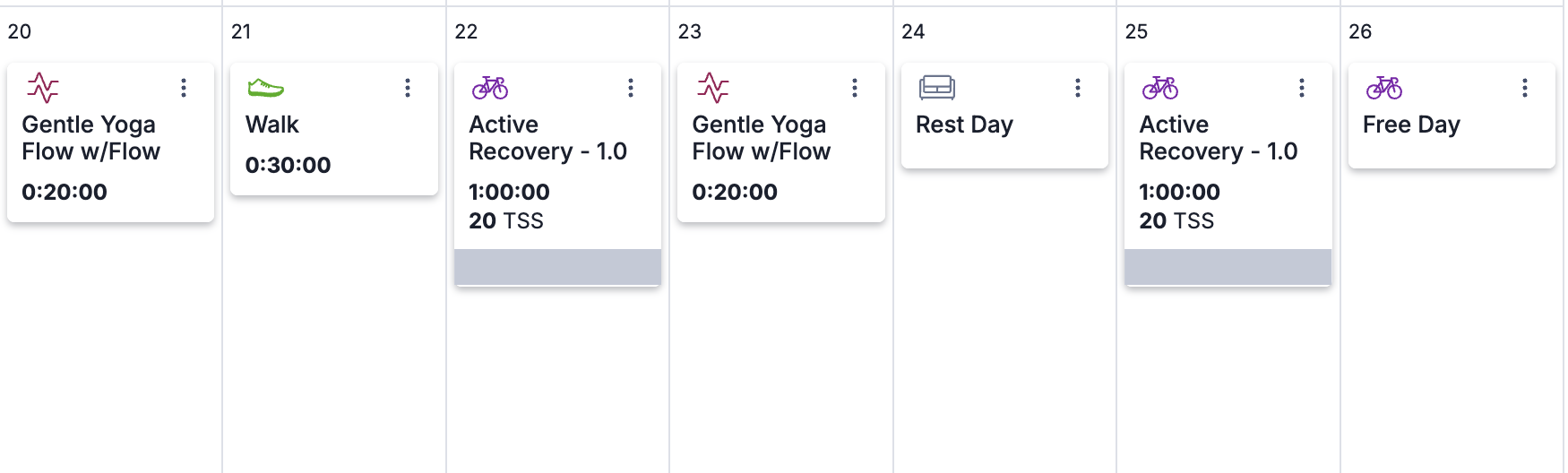
A transition week can be planned or unplanned.
Family vacations are one of my favorite ways to do it. Leave the bike at home, enjoy the trip, rest, and come back refreshed. Seven to ten days away from structured training is often enough to recharge mentally and physically.
Rest does not mean sitting on the couch for ten days. It might mean sleeping in, walking with your family, or going for an easy spin because you want to, not because your training plan says you should.
Another approach is scheduling a transition week after your biggest spring racing block. The catch is that you often make those decisions in January, and seasons rarely unfold exactly as planned. That’s why I prefer planning windows rather than exact dates.
Maybe you’re targeting Road Nationals at the end of June and Gateway Cup over Labor Day weekend. I’d pencil in a transition week after Road Nationals. But if you feel strong and motivated and the objective data supports continuing to ride, there’s no reason to stop simply because common practice says you should.
That’s the point of this article: learn your tells, use objective data to help confirm what you’re feeling, then decide from the complete picture instead of a date you picked back in January.
The snack-and-nap test
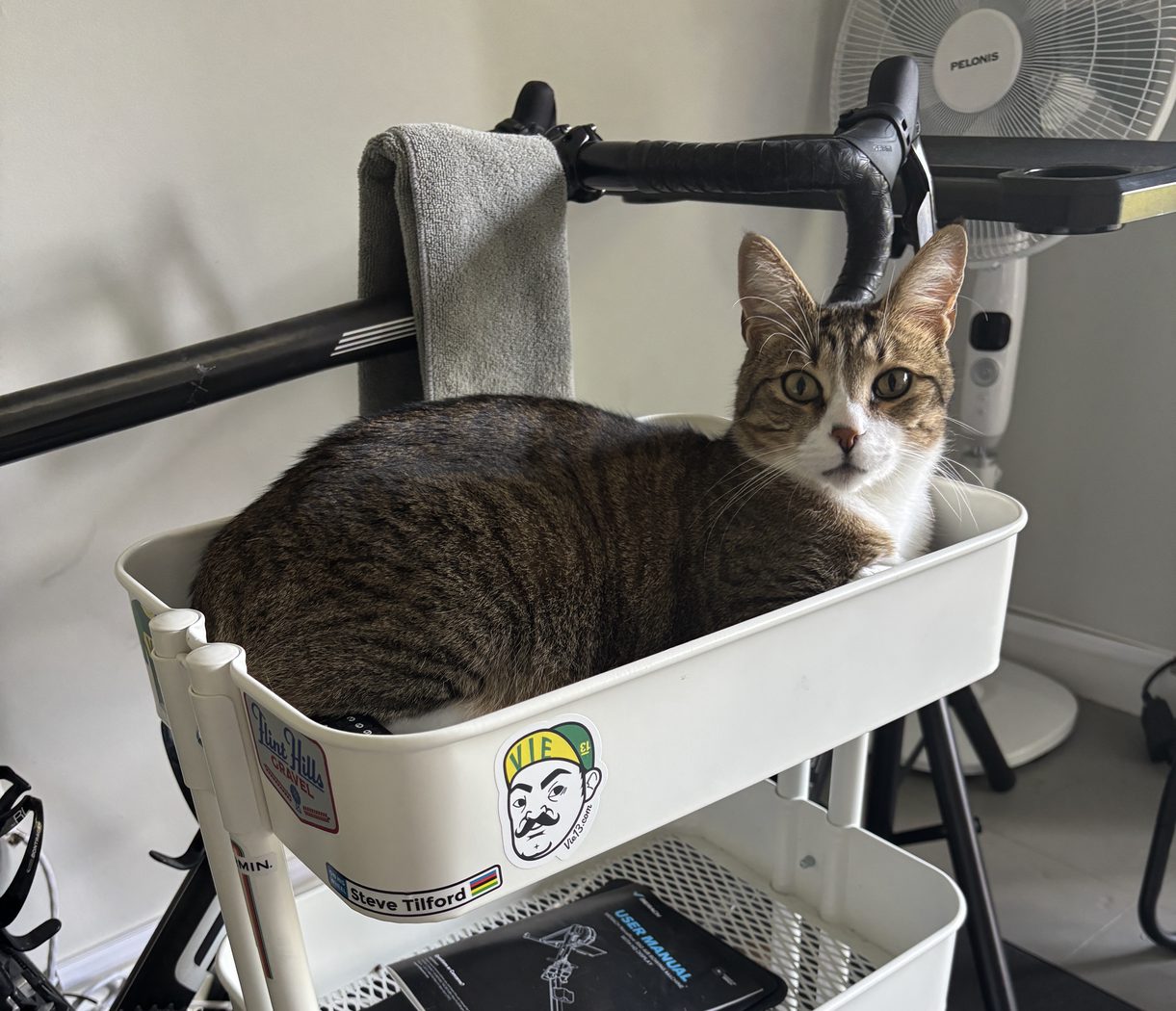
I’m writing this because I realized a few days ago that I needed to eat a snack and take a nap.
June and July have been really positive. Training has gone well, my diet has been on point, and I’ve had fun rides and social engagements. My motivation is still high and soreness is very low, but my body and mind are giving me signals that it’s time to rest. I developed a mild cold, my anxiety has been high (which is rare for me), and I’ve been getting grumpy about situations that would normally bounce right off me.
As much as it pains me, I need to rest. I don’t know how many days it will take, but it’s the only way forward.
The reframe I like is that I’ve already done a ton of productive work. Rest lets my body absorb that work, grow stronger, and come out the other side of a transition period more ready to tackle the training and races ahead.
Your homework: learn your tells
Maybe it’s your mood. Maybe it’s soreness. Maybe it’s motivation. Maybe it’s HRV finally confirming what you’ve been feeling all week.
Whatever they are, learn to recognize them. Eventually enough clues point in the same direction, and the answer becomes obvious.
Is it time to rest, or time to keep pushing?
If you want help interpreting the whole picture and building a training plan around your goals, learn more about Move Up cycling coaching.
