
Junior Cycling Training Guide
Good junior cycling training should build the athlete, not just chase the next result.
At Move Up, we believe long-term success comes from consistency, skill development, good habits, and learning how to train intelligently. Fitness matters, but it’s only one piece of the puzzle. We’ve worked with junior cyclists ranging from first-year racers to athletes competing at Junior Nationals, and one thing we’ve seen repeatedly is that the athletes who achieve the most over the long run are usually the ones who master the basics first.
They learn how to ride consistently. They learn how to recover. They learn how to communicate. They learn how to train hard when it’s time to train hard and rest when it’s time to rest. Most importantly, they learn how to enjoy the process. That may not sound very exciting in a world full of training apps, power data, and social media highlights, but the athletes who ultimately achieve the most are rarely the ones looking for shortcuts. They’re usually the ones who stay focused on the fundamentals and keep showing up day after day, month after month, and year after year.
 Start With Consistency
 Start With Consistency
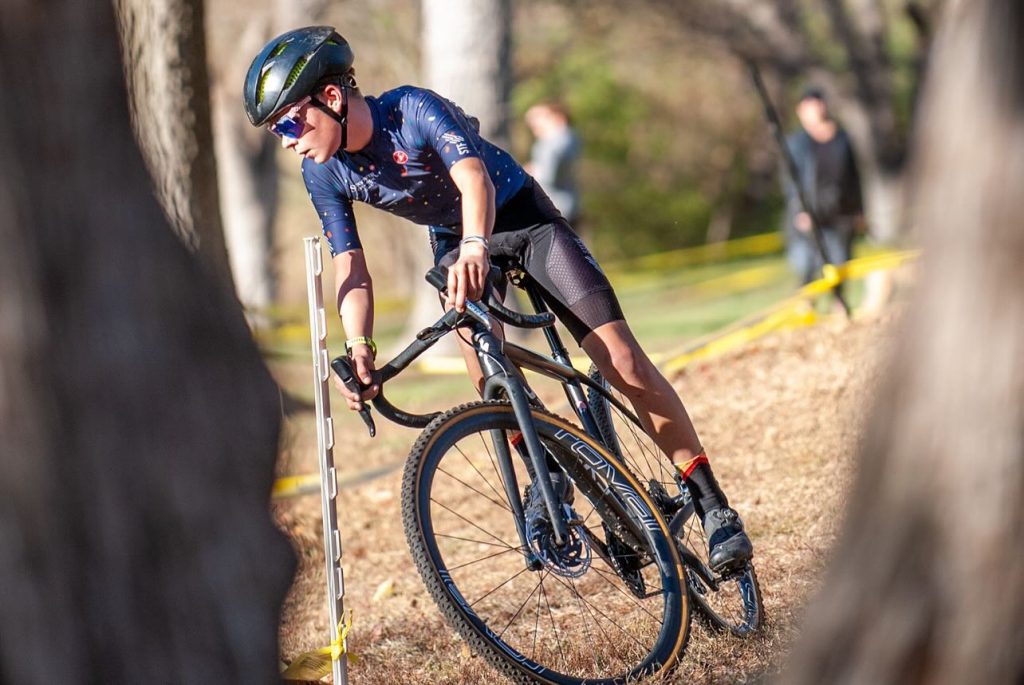
Before training gets complicated, riders need a routine they can repeat. Regular riding, enough sleep, good fueling, and a realistic weekly schedule matter far more than the perfect workout file.
One of the biggest mistakes young athletes make is believing success comes from a handful of heroic workouts. In reality, success usually comes from showing up week after week and month after month. Consistency isn’t always exciting, but it’s incredibly powerful. The athletes who improve the most are rarely the ones who have the best week of training. They’re usually the ones who string together months and years of steady progress while avoiding the cycle of doing too much, getting burned out, backing off completely, and then starting over.
Training Load Should Fit The Rider
No two junior athletes are exactly alike. Age, maturity, school stress, growth, experience, motivation, and goals all influence how much training makes sense.
Two athletes may be the same age, race in the same category, and ride at similar speeds while requiring completely different training approaches. One athlete may be sleeping nine hours per night and thriving, while another may be balancing AP classes, debate, band, cross-country running, family commitments, and a demanding academic schedule.
The training plan should fit the athlete, not the other way around. This is one of the reasons we spend so much time helping families balance cycling with the rest of life. Many of the athletes we coach are involved in Kansas NICA, Missouri NICA, cross-country, basketball, track, swimming, and a variety of academic and extracurricular activities. A successful training plan needs to account for all of those demands rather than pretending cycling exists in a vacuum.
One of the biggest mistakes we see is athletes trying to train like someone whose life looks completely different from theirs. A rider balancing NICA, honors classes, a part-time job, and family commitments may not be able to handle the same training load as someone whose only extracurricular activity is cycling. That’s okay. Success isn’t about doing the most training possible. It’s about doing the right amount of training for your situation and being consistent over time.
Key Training Priorities
- Aerobic endurance
- Basic strength and coordination
- Skills practice
- Short hard efforts when appropriate
- Recovery habits
- Confidence in pacing
- Learning how different efforts feel
- Communication and self-awareness
Most young athletes spend far too much time thinking about workouts and not enough time thinking about habits. The habits are often what determine long-term success. Athletes who consistently fuel well, sleep well, communicate effectively, and train with purpose usually put themselves in a much better position than athletes who obsess over every workout while neglecting the fundamentals.
This can be frustrating because habits aren’t flashy. Nobody posts screenshots of getting nine hours of sleep or consistently eating breakfast before school. Yet those simple behaviors often have a bigger impact on long-term development than the latest training trend or workout protocol.
Learning To Train By Feel
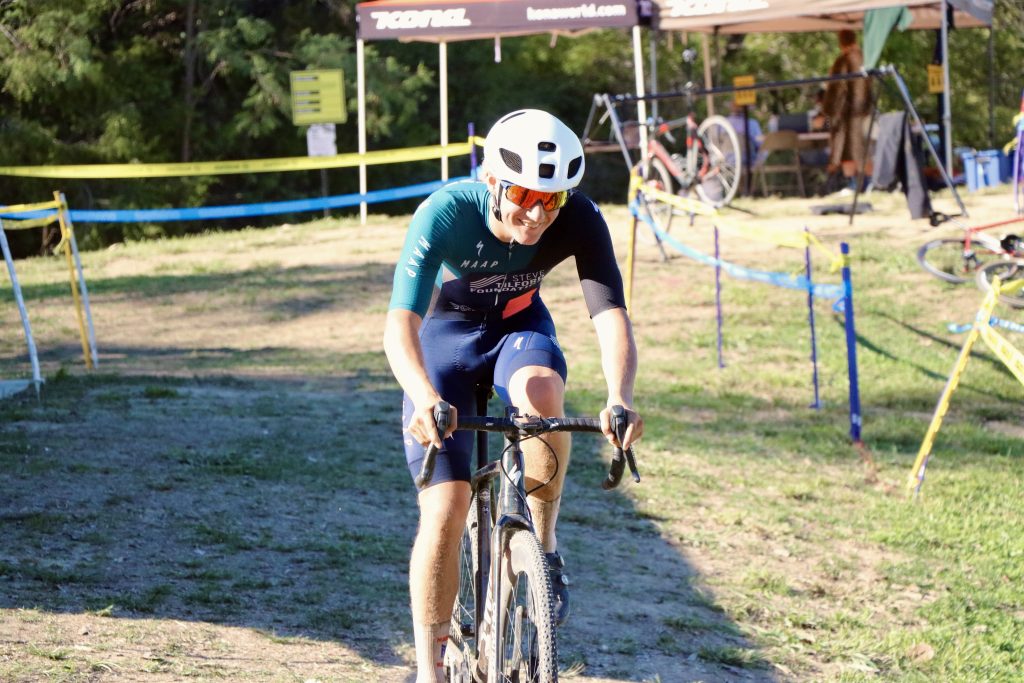 At Move Up, we’re big believers in tools like power meters, heart rate monitors, GPS computers, and training analysis software. Those tools can provide valuable information and help athletes better understand what’s happening during training and racing. If a junior athlete has access to those tools, great. We use data regularly and believe it can be incredibly valuable when used appropriately.
What we don’t want is for young athletes to become dependent on those tools before they’ve learned how to understand their own bodies. One of the most important skills a junior cyclist can develop is learning how different efforts actually feel. What does easy feel like? What does moderate feel like? What does hard feel like? Can they recognize when they’re carrying fatigue? Can they identify when they’re having a great day? Can they communicate those things to a coach?
Many young cyclists fall into the trap of making every ride moderately hard. They’re not really riding easy, but they’re not truly training hard either. Learning how different efforts feel is one of the foundations of long-term athlete development because it teaches athletes how to pace themselves, how to recover, and how to make smart decisions when conditions aren’t perfect.
Power, heart rate, and training software are valuable tools, but they should support an athlete’s development rather than replace their ability to listen to their body. The athletes who eventually become highly successful are usually very good at understanding their bodies and communicating what they’re experiencing. They know when they’re fresh, when they’re tired, when they’re motivated, and when life outside of cycling is affecting their performance.
Keep A Training Log
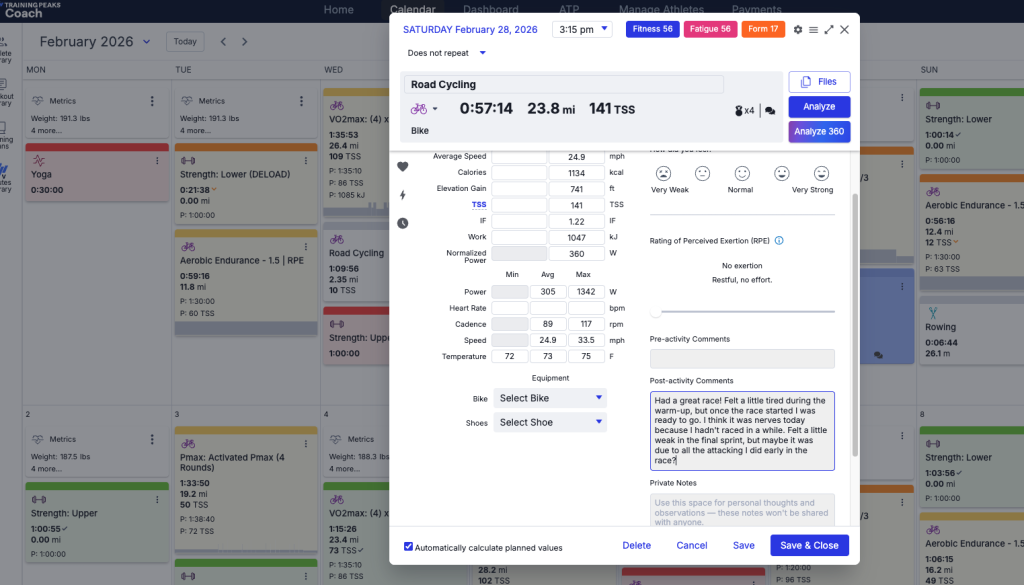 One of the simplest and most valuable habits a junior athlete can develop is keeping a training log. This doesn’t need to be complicated. In fact, simple is often better.
After each ride, athletes should get in the habit of asking themselves a few basic questions: How did I feel today? What went well? What was difficult? How was my energy? How was my motivation? What did I learn?
Those observations help athletes become more self-aware while providing valuable information to coaches, parents, and mentors. Learning how to communicate is a skill, and the earlier athletes develop that skill, the better. Some of the best conversations we have with athletes aren’t about watts, heart rate, or race results. They’re about confidence, motivation, stress, fatigue, excitement, and learning how to interpret what they’re experiencing in training, racing, and life.
The more effectively an athlete can communicate those things, the easier it becomes to make smart training decisions. A coach can only help with what they know. Athletes who learn to communicate honestly about how they’re feeling often make faster progress because adjustments can be made before small issues become bigger problems.
One tool we frequently recommend is TrainingPeaks. The free version is more than sufficient for most junior athletes and provides an easy place to record rides, track training consistency, and add notes about how they’re feeling. It syncs seamlessly with many cycling computers, smartwatches, heart rate monitors, and other wearable devices, making it easy to keep everything in one place.
What we like most about TrainingPeaks isn’t the data itself. It’s the opportunity it gives athletes to reflect on their training. A simple note about how a workout felt, how they slept the night before, or how stressed they were during a busy week at school can often be just as valuable as the power data from the ride. Learning to connect those dots helps young athletes become more self-aware and better communicators.
If a junior athlete eventually decides to work with a coach, there’s a good chance TrainingPeaks will become one of the primary tools used to communicate, review training, and track progress. The free version is a great place to start building those habits long before advanced metrics become important.
The more effectively an athlete can communicate those things, the easier it becomes to make smart training decisions. A coach can only help with what they know. Athletes who learn to communicate honestly about how they’re feeling often make faster progress because adjustments can be made before small issues become bigger problems.
Intensity Without Overdoing It
Hard training absolutely has a place. Junior athletes need opportunities to challenge themselves, develop fitness, and learn how to work hard. However, not every ride needs to become a test, and not every ride needs to become a race.
One of the challenges young athletes face today is that every ride can be uploaded, analyzed, compared, and shared. While technology provides a lot of benefits, it can also create pressure to constantly perform. It’s easy to fall into the trap of chasing numbers instead of focusing on the purpose of the workout.
The goal is to help athletes understand when to push and when to recover. The athletes who eventually reach elite levels are often surprisingly disciplined when it comes to easy rides and recovery days. They’re willing to be patient because they understand the bigger picture. Training hard is important, but recovering from that training is equally important.
We often remind athletes that the purpose of a workout isn’t to prove how fit they are. The purpose is to create a training response. Sometimes that means pushing hard. Sometimes that means staying disciplined and holding back. Learning the difference is a skill that pays dividends for years.
School, Sleep, And Life
Junior athletes aren’t professional athletes. They’re students, family members, friends, and young people who are still growing and developing.
School stress matters. Sleep matters. Family life matters. Social stress matters. A good training plan recognizes those realities and adjusts when necessary.
Sometimes the best training decision isn’t adding more work. Sometimes it’s getting more sleep. Sometimes it’s taking an extra recovery day. Sometimes it’s recognizing that a difficult week at school is creating stress that needs to be accounted for.
Many of the athletes we work with are balancing cycling alongside demanding academic schedules, multiple sports, jobs, leadership positions, and extracurricular activities. The goal isn’t to force the same workload every week. The goal is to keep moving forward while maintaining balance and enjoying the process. A training plan that works on paper but creates constant stress in real life is rarely sustainable.
Signs The Plan Is Working
- The rider is more confident
- Training feels understandable
- Recovery is steady
- Skills are improving
- The athlete still wants to ride
- Race-day execution is improving
- The athlete communicates well
- The athlete understands effort and pacing
Notice that most of those things have very little to do with race results.
Results matter, especially as athletes become more competitive, but they don’t always tell the full story. We’ve seen athletes execute a race extremely well and finish farther back than they hoped. We’ve also seen athletes get great results despite making poor decisions that aren’t sustainable over the long run.
The goal is to teach athletes how to evaluate performance within the proper context. Over time, the athletes who consistently focus on execution, habits, learning, and development tend to put themselves in the best position for results as well. As athletes progress through the sport, results become increasingly important. That’s reality. However, young athletes need to understand that results are usually a byproduct of consistently doing the right things rather than the sole measure of success.
What The Best Junior Athletes Tend To Have In Common
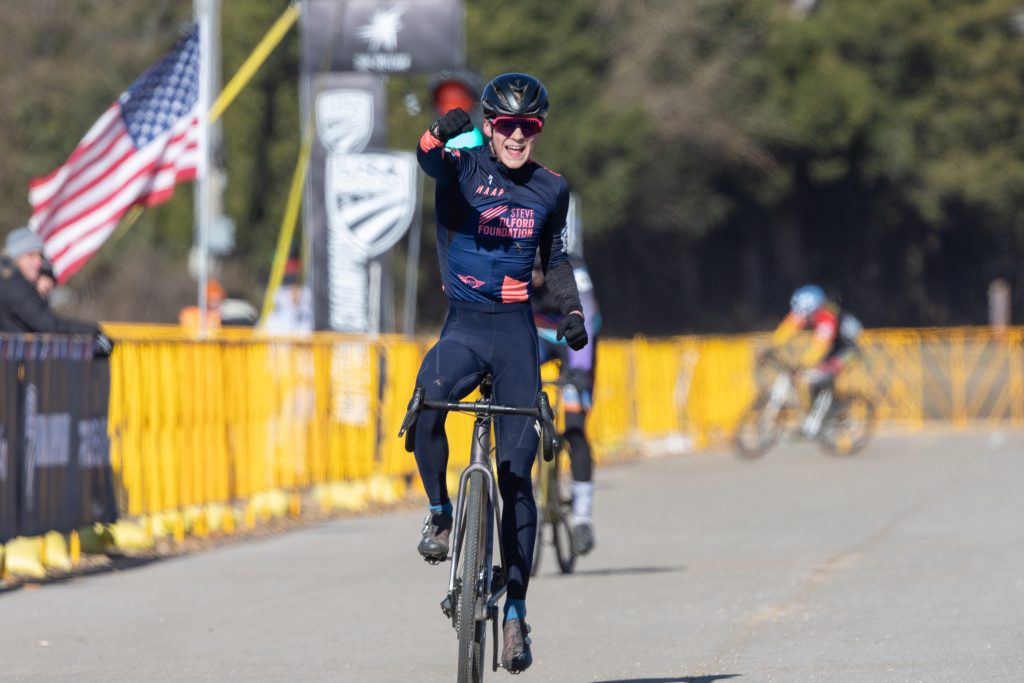 When people look at athletes who eventually win national championships, earn college opportunities, or receive invitations to race internationally, they often assume those athletes were doing something dramatically different from everyone else.
Most of the time, they weren’t.
The best junior athletes we’ve worked with usually focused on the basics. They had fun, they were consistent, they trained hard when the plan called for it, and they rested when they needed to. They listened, learned, and ignored a lot of the noise that surrounds youth sports.
They spent far less time searching for shortcuts and far more time focusing on execution. They showed up to practice, developed their skills, took recovery seriously, communicated well, and kept stacking good weeks on top of one another.
Eventually, results mattered. In fact, at the highest levels of the sport, results absolutely matter. But by the time those results became important, the habits, skills, and mindset were already in place.
The athletes who ultimately achieve the most are rarely the ones chasing every advantage at age 14. They’re usually the ones who learned how to enjoy the process, stay consistent, communicate effectively, and focus on what they could control. Those habits become the foundation that allows everything else to work later on.
Related Resources
Move Up offers coaching that can be tailored to junior riders, families, and race seasons. Learn how coaching can support junior cyclists.