
Successful cycling team strategy is not about following a rigid script. It is about creating an advantage, recognizing when the race has changed, and helping the best-positioned teammate use that advantage.
Adapted from a Move Up Cycling Club race-strategy presentation developed and taught by Kent Woermann.
In road races, criteriums, and many gravel races, teams can improve their chances by doing four things well:
- Study the course and identify decisive sections.
- Give riders clear but adaptable roles.
- Choose whether to create an advantage up the road or control the race for a protected rider.
- Communicate and adjust as the race develops.
Move Up teaches two frameworks for organizing those decisions: the Advantage Method, which uses attacks and breakaways to create favorable numbers, and the Control Method, which protects one or more riders for a decisive climb, sector, or finish.
These are not professional-only tactics. Club teams can use them whenever teammates are racing together and the event format, course, and rules make cooperation possible.
Start With the Fundamentals of Cycling Race Tactics
A team strategy only works when every rider understands the basic moves that shape a race.
Attack
An attack is a hard acceleration intended to create separation from the group. Effective attacks use position, terrain, wind, timing, and momentum. Accelerating from several wheels back can produce more speed than beginning from the front, where everyone can immediately see and respond.
Most attacks fail. That is normal. If the field is immediately on your wheel, avoid dragging everyone along while you remain exposed at the front. Reset, recover, and prepare for the next move or counterattack.
Breakaway
A breakaway forms when one or more riders separate from the main group and establish a sustainable gap. A breakaway is not automatically good for your team. Its value depends on who is represented, how many teammates are present, the course remaining, and the riders' relative strengths.
Bridge
Bridging means crossing the gap between groups, usually alone or with a small number of riders. A bridge attempt should improve your team's position. Do not help a group reach a breakaway when doing so would erase your teammate's advantage.
Cover a Move
Covering means following an opponent's attack rather than initiating the move yourself. It is an efficient way to keep your team represented near the front of the race, especially when the competition is unfamiliar or conditions make repeated attacks expensive.
Counterattack
A counterattack is launched immediately after a move has been caught. Riders who completed the chase are often tired, disorganized, or looking at one another. That brief hesitation can be one of the best moments to attack.
Chase
A chase is an organized effort to catch a rider or group ahead. Chasing costs substantial energy and often means the team missed an earlier tactical decision. Under the Advantage Method, a full chase should usually be a last resort.
Sit In
A rider who sits in remains in a breakaway or chase group but does not contribute to the rotation. This can protect a teammate who is farther up the road, but it should be done without disrupting or endangering the other riders. Expect the decision to create tension; everyone in the group understands what is at stake.
Leadout
A leadout is an organized line of teammates that protects and positions a designated rider for a sprint, climb, technical sector, or other decisive point. A leadout is not limited to the final few hundred meters. In gravel racing, a team may use a similar formation to deliver a protected rider to a narrow road, crosswind section, or technical sector near the front.
Four Steps to Building a Team Race Plan
1. Study the Course
Course reconnaissance should identify more than the finish. Review the route in advance and ride or drive important sections when possible.
Look for:
- Key climbs and the terrain immediately before them
- Crosswind and headwind sections
- Narrow roads, corners, and other pinch points
- Changes between pavement, gravel, and technical surfaces
- Rough or loose sectors where positioning and equipment matter
- Feed zones, aid stations, and places where a gravel field may become disorganized
- The distance from the final decisive feature to the finish
A pinch point is especially important. A crosswind leading into a narrow gravel road, for example, may split the field before the rough section even begins. The race can be decided by the position established several minutes earlier.
2. Assign Flexible Roles
Clear roles reduce hesitation, but they should not prevent riders from responding to the race in front of them.
Team captain: The captain leads the pre-race discussion and helps make decisions during the event. This does not have to be the strongest rider. It should be the person who best understands the team, course, competition, and likely race dynamics.
Finishers or protected riders: These riders are most likely to convert a good position into a result. A finisher might be a sprinter, climber, technically strong gravel rider, or simply the teammate having the best day.
Helpers: Helpers protect teammates, cover dangerous moves, contribute to chases or leadouts, communicate information, and spend energy where it creates the most value for the team.
Roles can change. A protected rider who is struggling may become a helper. A helper who makes the decisive breakaway may become the team's best chance to win. Strong teams recognize that change quickly and without ego.
3. Hold a Short Pre-Race Meeting
Meet 30 to 60 minutes before the start, with everyone dressed and ready to warm up. The meeting should answer:
- Where is the race most likely to split?
- Which riders or teams cannot be allowed to leave without representation?
- Are we using an Advantage or Control approach at the start?
- Who is initially protected?
- What should riders do if the first plan fails?
- How will the team communicate during the race?
Keep the plan simple enough to remember under pressure.
4. Race the Situation, Not the Meeting
Once the race starts, be active, communicate clearly, and remain adaptable. A useful plan gives riders a shared framework; it does not predict every move.
The most important team habit is selflessness. Every rider must be willing to recognize when the team's best option has changed.
Choosing the Right Team Strategy
| Advantage Method | Control Method | |
|---|---|---|
| Primary goal | Create favorable numbers in a breakaway | Protect a rider for a decisive moment |
| Style | Offensive and adaptable | Defensive and organized |
| Best fit | No obvious single leader; breakaways likely; several capable finishers | One rider has a clear finishing, climbing, or technical advantage |
| Main tools | Attacks, counterattacks, covering moves, bridging | Positioning, steady tempo, leadout formation, crosswind organization |
| Common failure | Teammates chase one another or work in unfavorable moves | Team forms too late, surges, or allows opponents to infiltrate the formation |
Many races require both methods. A team may begin by creating an advantage, then switch to control once the strongest tactical option becomes clear.
The Advantage Method: Create Favorable Numbers Up the Road
The Advantage Method attempts to place one or more teammates in a breakaway, ideally with more riders than any competing team in that group.
This approach works well when several teammates are capable of finishing, the race is likely to split repeatedly, or it is too early to commit every rider to one leader.
Attack and Counterattack as a Team
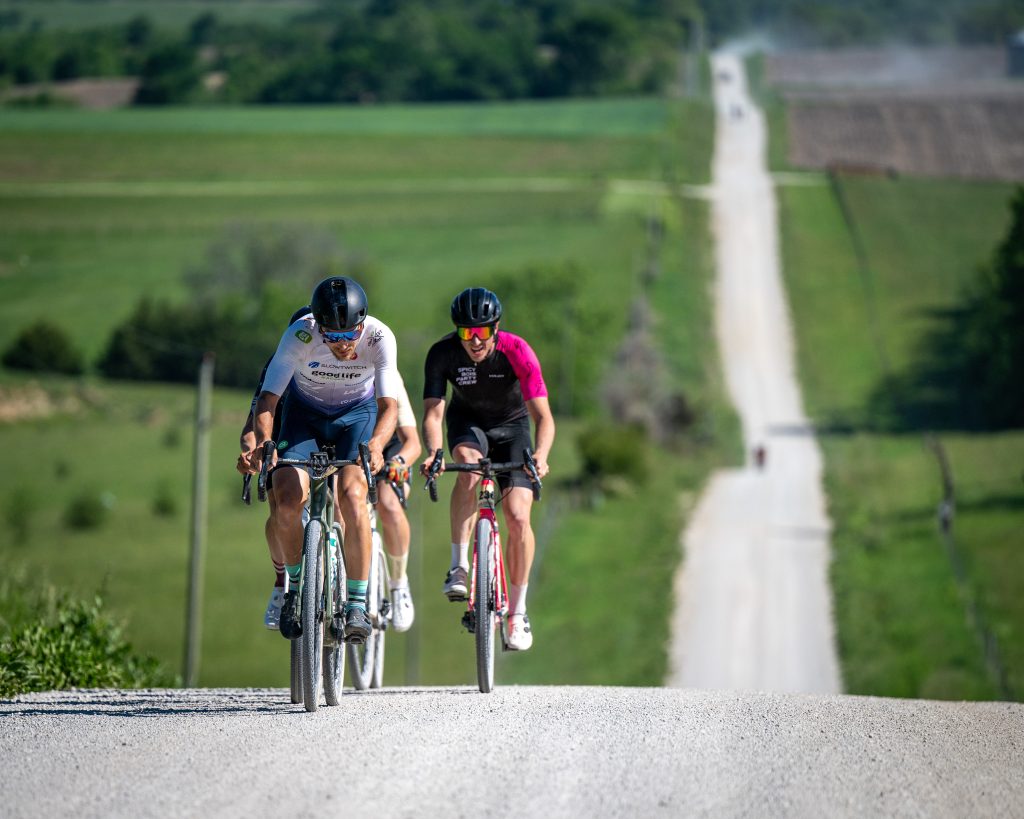
With a larger team, riders can attack and counterattack until fatigue or hesitation allows a move to separate. The rider who has just been caught should expect someone else—teammate or opponent—to counter.
The team behind should not automatically chase its own rider. Instead, teammates remain near the front, cover dangerous bridge attempts, and prepare to join the next promising move.
Cover Important Moves
Covering is often more economical than initiating every attack. Follow riders and teams capable of making the decisive selection.
Once the move forms, evaluate the situation:
- Advantage: Your team has more riders than any competing team in the breakaway. Commit to making the move succeed.
- Neutral: Teams have roughly equal representation. Contribute enough to keep the move functional while preserving options.
- Disadvantage: Another team has superior numbers or a combination your team cannot beat. Limit your contribution and look for a teammate to bridge, or allow the race to reset if the move is unfavorable.
Build an Island
Sometimes an early breakaway is useful but not yet strong enough to justify full commitment. The rider ahead can maintain a manageable gap—an "island"—while teammates try to bridge through later moves.
This requires judgment. Ride hard enough to stay clear, but not so hard that teammates cannot reach the move or that you spend all your energy defending a poor tactical position.
Chase Only When Necessary
If a dangerous breakaway forms without your team, organize quickly. Communicate with other teams that also missed the move and share the work when interests align.
Never chase simply because a teammate is ahead. Before contributing, know who is in the breakaway, whether your team is represented, and whether catching it genuinely improves your position.
The Control Method: Protect a Rider for the Decisive Moment
The Control Method assembles the team near the front and manages the race so a designated rider reaches an important climb, technical sector, or finish with as much energy and position as possible.
Use it when one rider has a clear advantage if the team can deliver them to the right place.
Form Before You Need Control
Moving several riders through a field takes time. If the decisive point is ten kilometers or five laps away, begin organizing well before that mark.
The protected rider normally sits near the back of the team line, sheltered from the wind but not so far back that opponents can easily separate them from their helpers.
Hold a Sustainable Tempo
The team's pace should be fast enough to discourage attacks and prevent riders from swarming around the formation, but no harder than necessary. If opponents begin moving up both sides, riders at the rear of the line should communicate so the pace can rise gradually.
Avoid abrupt surges. A smooth, high pace is easier for teammates to follow and harder for competitors to exploit.
Rotate Efficiently
When a rider finishes a pull:
- Check that it is safe to move off the front.
- Stop applying pressure and return to the line promptly.
- Move back into shelter rather than drifting beside the formation.
- Rejoin ahead of the protected rider when possible.
The next rider should maintain the established speed. Slowing invites attacks; surging burns through teammates prematurely.
Respond to Attacks as a Unit
Do not automatically dismantle the formation every time someone attacks. Gradually increase the pace and bring the rider back when possible. If a dangerous group gains separation, the team may need to commit more riders, but the protected rider should be used only as a last resort.
Use Wind Without Sacrificing Safety
Crosswinds can reduce the benefit opponents receive from drafting. A team at the front can form an echelon and rotate smoothly while riders behind are forced into greater wind exposure.
Use the legal portion of the course, leave adequate room, hold predictable lines, and follow the event's centerline and full-road rules. Intentionally forcing another rider off the road, making abrupt lateral movements, pushing, or using dangerous contact is not team strategy.
How These Strategies Change in Gravel Racing
Team tactics apply to more gravel races than many riders realize, especially when a competitive front group remains together for long stretches.
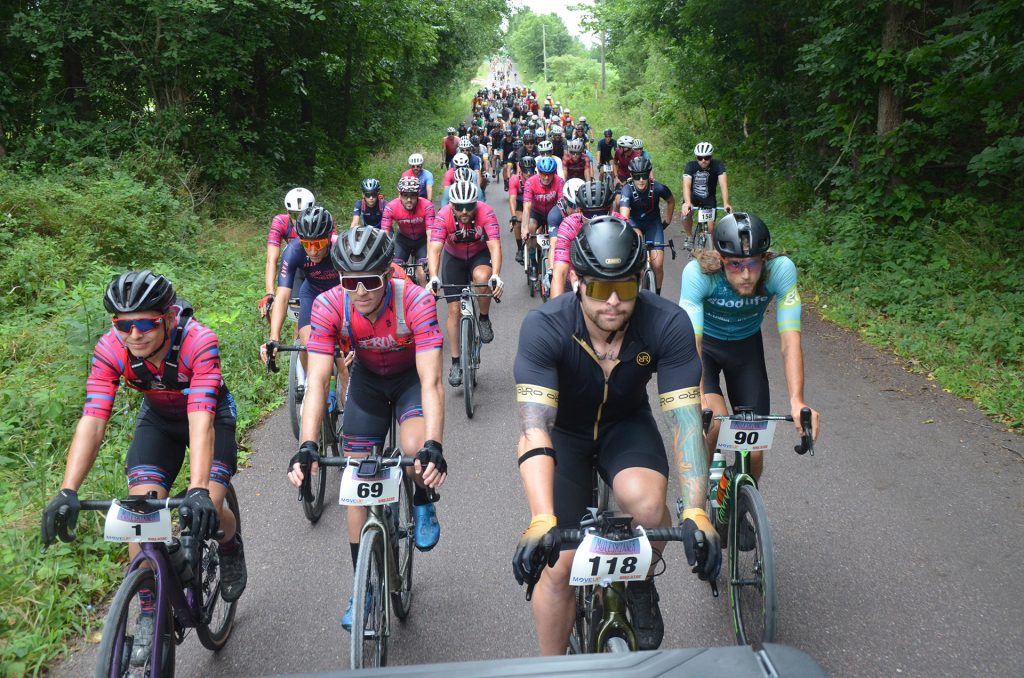
The principles are the same, but gravel changes the execution:
- Positioning happens earlier. Narrow roads, loose corners, water crossings, and technical sectors can make passing difficult. Delivering a rider near the front before the sector may matter more than attacking inside it.
- Mechanical risk changes the calculation. A teammate who is essential to the plan may disappear after a puncture. Riders need permission to adapt without waiting for instructions that may never arrive.
- Communication is harder. Dust, wind, distance, and broken groups can separate teammates. Pre-race rules for common situations become more valuable.
- Aid stations interrupt formations. Teams should know whether they are stopping, rolling through, or regrouping, while following the event's support rules.
- Cooperation may be temporary. Riders from different teams often work together for many kilometers before their interests diverge near the finish.
- Conservation matters more. A tactical advantage is useless if riders underfuel, overextend early, or reach the decisive section depleted.
In a gravel race, the Advantage Method might mean placing two teammates in the front selection while the rest avoid helping a chase. The Control Method might mean using several riders to shelter a strong finisher through a windy approach and deliver them first into a narrow, decisive sector.
Two Practical Race Scenarios
Criterium: Build and Convert a Numbers Advantage
A teammate attacks early and enters a small breakaway. Another teammate covers a later bridge attempt and reaches the front group, giving the team two riders in a four-rider move.
The riders remaining in the field do not chase. They stay near the front, cover only dangerous attempts, and conserve energy.
Late in the race, one teammate attacks the breakaway. When the strongest opponent closes the gap, the second teammate counterattacks. The first attack does not need to win; its job is to force the competition to spend energy and give the counterattack a better chance.
Points Race or Predictable Finish: Control for the Sprinters
The team identifies two strong finishers and three helpers. Before each points lap, the helpers organize at the front and rotate smoothly while the finishers remain sheltered.
The team increases the pace approaching the sprint, discouraging attacks and delivering both finishers into the final few hundred meters. After the sprint, the group reorganizes rather than assuming the work is finished. Competitors often counterattack immediately after a hard effort.
The same sequence can apply before a decisive gravel sector: organize, control position, deliver the protected riders, and remain prepared for the move that follows.
Team Race Strategy Checklist
Before the race:
- Identify the decisive climbs, corners, wind sections, and surface changes.
- Choose an initial captain, finishers, and helpers.
- Decide which opponents or teams must be covered.
- Select the Advantage or Control Method as the opening plan.
- Agree on what triggers a change in strategy.
- Review USA Cycling's current rulebook, event-specific rules, and the technical guide.
During the race:
- Communicate loudly and clearly.
- Know whether the team has an advantage, neutral representation, or a disadvantage up the road.
- Do not chase a teammate without a specific tactical reason.
- Protect the best-positioned option, even when it was not the pre-race favorite.
- Ride predictably and safely in formations and crosswinds.
- Keep fueling, drinking, and managing equipment—the tactical plan still depends on functioning riders.
After the race:
- Debrief the decisions, not only the result.
- Identify where the team lost or created an advantage.
- Discuss communication failures without assigning blame.
- Carry one or two specific lessons into the next event.
A Good Plan Makes Better Decisions Possible
The best team strategy does not guarantee a result. It gives riders a shared way to understand the race, spend energy intentionally, and respond together when the original plan stops fitting.
Create an advantage when the race is open. Control the race when a teammate has a clear opportunity. Most importantly, remain alert enough to recognize when it is time to switch.
For more race preparation guidance, explore the Road Cycling and Criterium Racing Resources, Ultra Gravel Racing 101, and Move Up's broader cycling training resources.
If you want help connecting fitness, race demands, and tactical decisions into one plan, learn how Move Up coaching works or schedule a free athlete consultation.